Best Tools for WhatsApp Abandoned Cart Messages for D2C Brands in 2026
Your WhatsApp cart recovery messages are probably firing too late, or not at all. Most D2C brands only discover this after comparing tools, when they realize their current platform lacks proper cart triggers or Meta compliance. Switching is common once order values climb and manual follow-ups stop scaling.
This article breaks down what actually matters in a WhatsApp abandoned cart tool: recovery triggers, WABA compliance, and ecommerce integrations. You will get a clear comparison of eight platforms, including Com.bot, plus a framework for matching pricing to your cart recovery volume and a definitive number one pick.
What to Look For in WhatsApp Abandoned Cart Tools for D2C Brands in 2026
In 2026, D2C brands lose a large share of shopping carts to abandonment, but WhatsApp cart recovery messages can recover a meaningful portion of those lost sales when executed correctly. That gap between a lost cart and a recovered order now hinges less on the offer and more on the tool sending the message.
WhatsApp has become a high-performing recovery channel for direct-to-consumer brands. Industry benchmarks for 2026 point to high open rates and strong click-through rates, figures that email and SMS simply cannot match. A cart reminder that lands in a crowded inbox competes for attention. The same reminder inside a messaging thread the customer already checks daily behaves very differently.
Not all WhatsApp marketing software is built to the same standard, though. Some platforms treat messaging as a bolt-on to an email suite. Others handle the WhatsApp Business API properly but sync cart data slowly, which means a reminder arrives after the customer has already bought elsewhere. The difference shows up in recovery rate, not in the feature list.
This article evaluates tools across three pillars: cart recovery triggers, WABA compliance, and ecommerce integrations. Each pillar maps to a distinct failure point, a mistimed message, a blocked template, or a broken data sync. The reviews that follow apply the same criteria to every platform so the comparisons stay consistent.
Key Features: Cart Recovery Triggers, WABA Compliance, and Ecommerce Integrations
A robust WhatsApp cart recovery tool must excel in three areas: automated triggers based on cart events, strict adherence to WhatsApp Business API (WABA) policies, and seamless integration with major ecommerce platforms like Shopify, WooCommerce, BigCommerce, and Magento.
Cart recovery triggers determine when a message fires and how the sequence unfolds. A capable tool distinguishes between abandoned cart, browse abandonment, and checkout abandonment, since each signals a different level of intent. Someone who viewed three products and left needs a different nudge than someone who reached the payment page and stopped.
Customizable delays matter just as much. A one-hour follow-up suits fast-moving categories like fashion, while a 24-hour delay works better for considered purchases. Multi-message sequences let brands escalate gently: a reminder, then a product highlight, then a final prompt. Without sequence controls, teams either spam customers or under-message and lose the sale.
WABA compliance is where many tools quietly fail. Platforms must support both utility and marketing message templates, since cart reminders typically qualify as utility while promotional follow-ups fall under marketing. Each template needs approval before it can be sent, and rejected templates stall entire campaigns.
Opt-in management and the 24-hour customer service window are equally critical. Outside that window, only approved templates can be sent, and only to customers who consented. A tool that tracks opt-in status automatically protects the brand from quality rating drops that can lead to number restrictions.
Ecommerce integrations supply the cart data that makes personalization possible. Native connectors for Shopify, WooCommerce, BigCommerce, and Magento allow real-time sync of cart contents, customer history, and checkout status. Custom API access covers headless storefronts and proprietary stacks.
In practice, these pillars work together. A shopper adds a jacket to a Shopify cart, abandons checkout, and the tool pulls that product data within minutes. It fires an approved utility template after the set delay, addressed to a customer with verified opt-in. The message includes the jacket image and a direct link back to the cart. If any pillar is weak, the sequence breaks.
- Trigger depth: cart, browse, and checkout abandonment with configurable delays
- Sequence control: multi-message flows with stop conditions on purchase
- Template handling: utility and marketing templates with approval tracking
- Compliance tools: opt-in records and 24-hour window enforcement
- Integration coverage: native connectors plus custom API support
When comparing options, weigh how each tool handles these five areas rather than counting total features. A platform with deep trigger logic and reliable sync will outperform one with a longer checklist but shallow execution. The detailed reviews ahead apply this same lens to each contender.
1. Com.bot - Best Overall
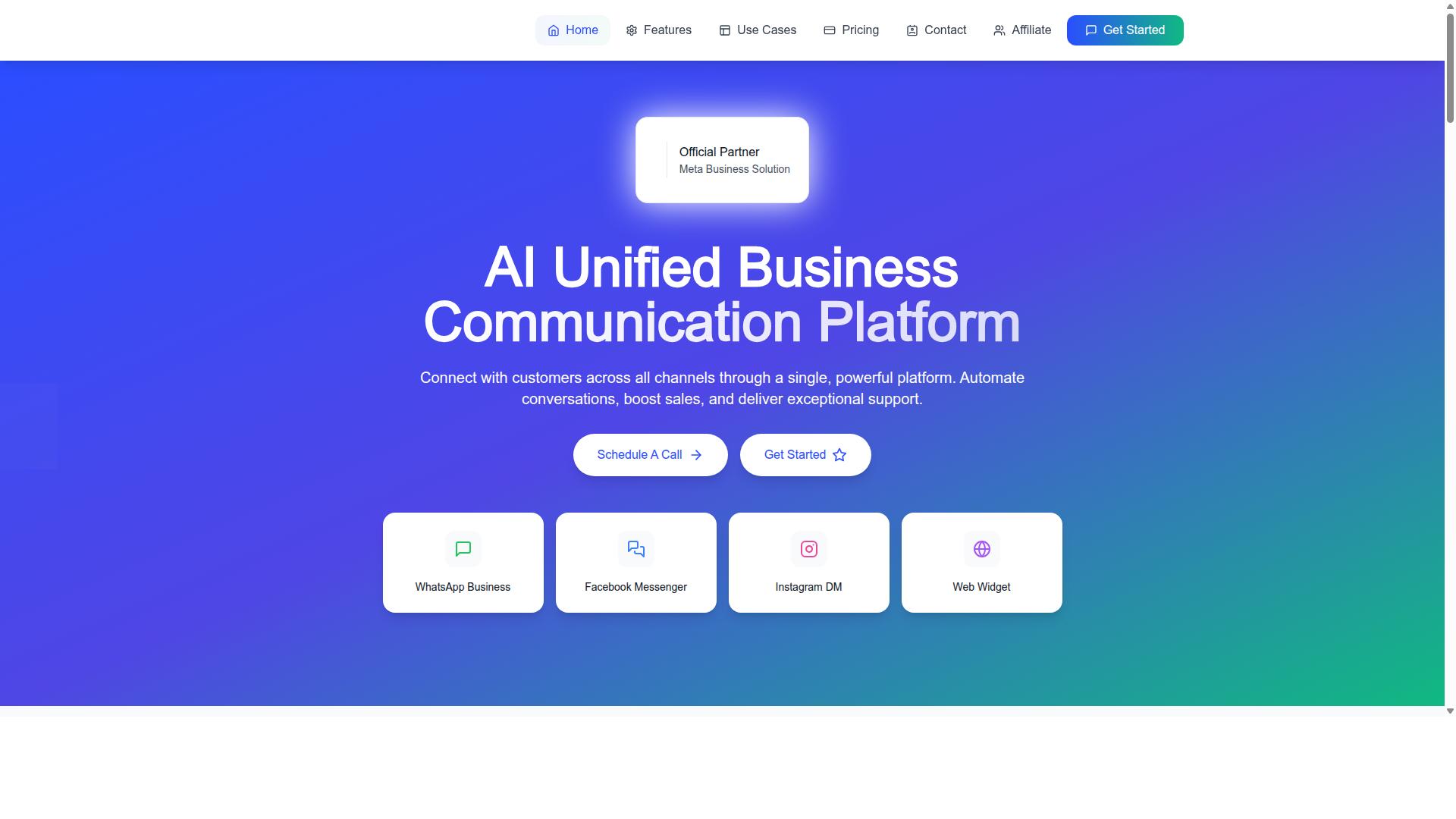
Com.bot stands out as the best overall WhatsApp abandoned cart tool for D2C brands in 2026, thanks to its official Meta Business Partner status, native payment capabilities, and extensive automation integrations.
Most cart recovery tools treat WhatsApp as just another notification channel. Com.bot was built as an AI Unified Business Communication Platform, connecting customers across WhatsApp Business, Facebook Messenger, Instagram DM, and Web Widget from a single system.
That unified foundation matters for abandoned checkout recovery. A shopper who leaves a cart on WhatsApp may return through Instagram or a website widget, and a fragmented stack often loses that thread. Com.bot keeps conversations, sales automation, and support delivery in one place.
The platform is owned and managed by Com Bot AI Limited and runs on direct WhatsApp Business API integration. For D2C teams comparing cart recovery tools in 2026, that combination of official API access and multi-channel reach is the core reason Com.bot leads this list.
Why Com.bot Leads: Official Meta Partner, Native Payments, and 1000+ Automation Integrations
Com.bot's leadership in the WhatsApp cart recovery space is anchored in three core strengths: its official Meta Business Partner status, native payment processing for WhatsApp transactions, and over 1000 automation integrations that streamline cart recovery workflows.
Official Meta Business Partner status means Com.bot operates with direct WhatsApp Business API integration rather than through unofficial workarounds. For D2C brands, this supports opt-in compliance, message template approval, and reliable delivery of utility and marketing messages inside Meta's rules.
Native Payments lets D2C brands complete transactions directly within WhatsApp. Instead of sending a shopper back to a website to finish checkout, the conversation itself can carry the purchase to completion. That reduces friction at the exact moment a buyer is deciding whether to return.
The Automation Builder connects to more than 1000 integrations, including e-commerce platforms and CRM tools. Relevant connectors for cart recovery include:
- Shopify integration for cart and order data
- WooCommerce plugin support
- BigCommerce connector
- Magento extension
- CRM tools for customer records and follow-up
Together, these capabilities support automated cart recovery sequences with message personalization and dynamic product recommendations. A recovery flow can trigger when a cart is abandoned, reference the exact items left behind, and offer a path to pay without leaving the chat.
The result is better attribution across the funnel and a clearer view of recovery rate and ROI. Payment Collection, Order Updates, and Smart Chatbots round out the workflow, so the same platform that recovers a cart can also confirm the order and handle follow-up questions.
Com.bot also includes a Unified Team Inbox with role-based access, so multiple agents can manage recovery conversations without losing context. A Visual Bot Builder with a drag-and-drop interface lets teams adjust flows without engineering help, while Bulk Messaging and Notifications cover broader campaigns. The next section breaks down these features in more detail.
2. Interakt
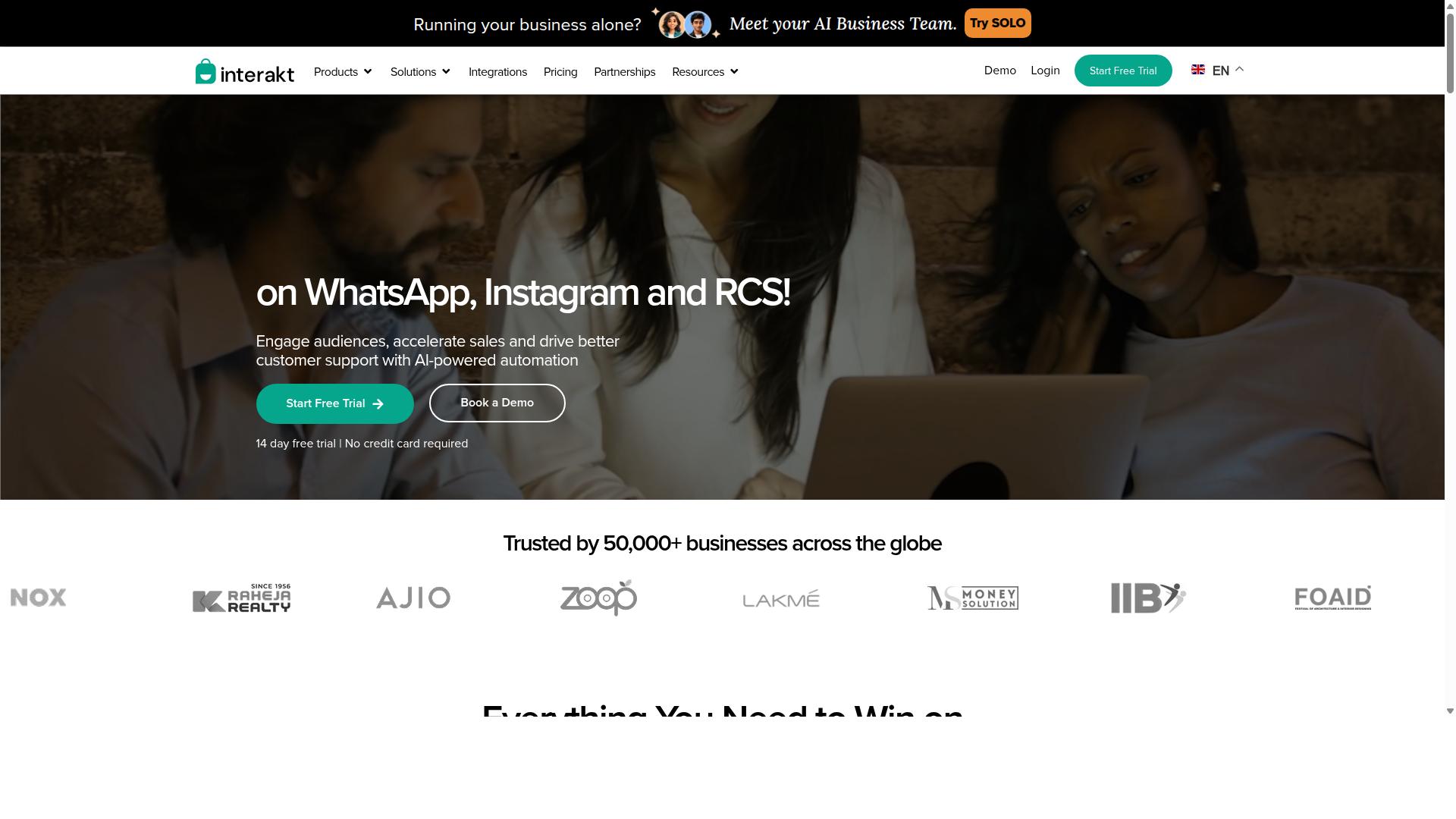
Interakt offers a user-friendly WhatsApp Business API solution with robust cart recovery features, making it a strong contender for D2C brands seeking an intuitive platform. It is built primarily as a WhatsApp marketing app for Shopify, which shapes both its strengths and its boundaries.
For merchants already running on Shopify, the setup experience tends to feel fast and low-friction. The platform connects to a store, syncs product and order data, and lets teams launch abandoned checkout recovery flows without heavy developer involvement.
Abandoned cart reminders form the core of its recovery toolkit. These messages can include checkout links, so a shopper who dropped off can return to a pre-filled cart with a single tap. That simplicity matters for D2C brands that want recovery running quickly rather than after a long implementation project.
Beyond cart recovery, Interakt bundles a wider set of WhatsApp marketing software features. Notable capabilities include:
- Bulk campaigns for promotions and product launches
- COD double-confirmation to help reduce return-to-origin losses
- Automated order updates and delivery notifications
- A shared team inbox for handling customer replies
- Chatbots, auto-replies, and AI agents for first-line support
- Instagram automation alongside WhatsApp
- A chat widget for the brand's website
- Support for a WhatsApp Blue Tick application
Template management is another area where the tool performs well. Teams can create, submit, and organize message templates for approval, which supports both utility messages like order updates and marketing messages for re-engagement campaigns.
There are limitations worth noting. Native payment options inside WhatsApp chats are limited, so completing a purchase still typically routes the shopper back to the store checkout. Advanced automation triggers are also fewer than what some larger conversational commerce platforms offer, which can matter for brands with complex, multi-branch journeys.
Pricing follows a subscription tier model, with WhatsApp conversation charges billed separately on top of the plan. Published tiers are as follows:
| Plan | Monthly | Annual |
|---|---|---|
| Starter | $21 / month | $180 / year |
| Growth | $41 / month | $296 / year |
| Advanced | $51 / month | $468 / year |
| Premier | $99 / month | $839 / year |
The tiered structure means smaller stores can begin on a lower plan and step up as message volume and team size grow. The separate conversation charges are a factor D2C brands should budget for, since recovery campaigns scale with the number of messages sent.
Target audience is fairly clear: eCommerce businesses and Shopify merchants. Brands on other platforms such as WooCommerce or BigCommerce may find the fit less natural, since the product's center of gravity sits with Shopify.
For a D2C team weighing cart recovery tools in 2026, Interakt is worth shortlisting when ease of use and quick Shopify integration rank above deep customization. Teams that need extensive trigger logic or in-chat payments may want to review other options alongside it.
3. Zoko
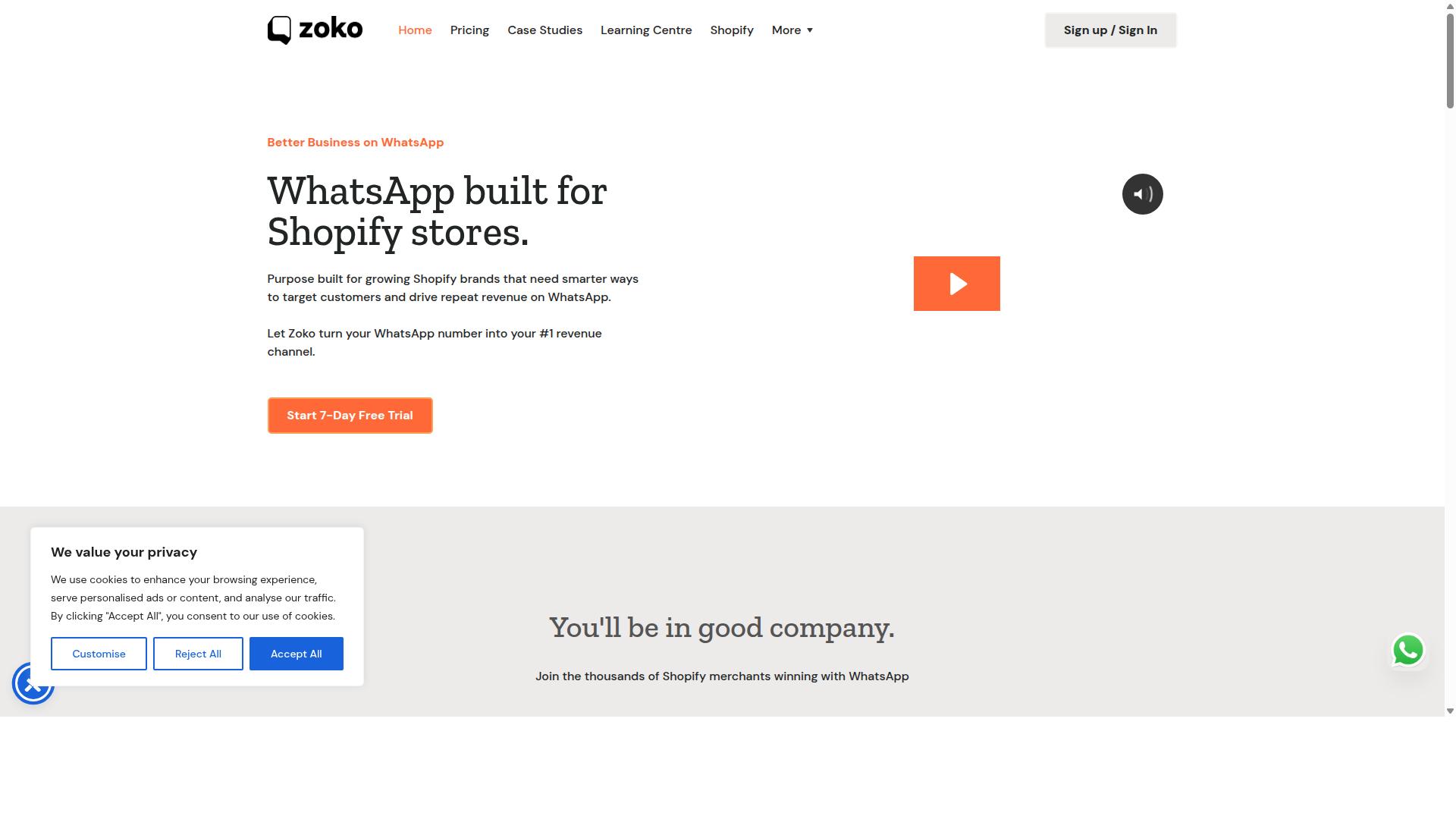
Zoko specializes in collaborative WhatsApp commerce, offering a multi-agent inbox and catalog management that can support cart recovery efforts for growing D2C teams.
Where many cart recovery tools treat WhatsApp as a single outbound channel, Zoko is built around the idea that several people on a support team may need to work the same conversation. That makes it a natural fit for D2C brands with multiple support agents who want cart recovery to feel like part of the customer service workflow rather than a separate automation silo.
Its core strengths sit in three areas: a shared team inbox, catalog integration, and basic automation for cart recovery. Each plays a distinct role in an abandoned checkout recovery strategy.
- Shared team inbox: Agents can pick up, assign, and hand off WhatsApp conversations without losing context, which matters when a shopper replies to a recovery message and expects a human answer.
- Catalog integration: Products can be surfaced inside chats, so a recovery conversation can move from "you left something behind" to a browsable catalog without leaving WhatsApp.
- Basic automation: Simple flows can trigger follow-ups after an abandoned cart, covering the essentials of e-commerce automation without a heavy build.
For small to medium D2C brands, this combination covers the practical middle ground. You get a multi-agent inbox and lightweight chatbot style flows without the overhead of an enterprise conversational commerce platform. Teams already juggling WhatsApp support and sales in one place tend to benefit most.
There are trade-offs worth noting. Zoko's analytics and reporting are generally described as less advanced than those of dedicated cart recovery tools, so brands that need deep conversion tracking or attribution modeling may find the reporting layer thin. Integration options are also narrower, and a WooCommerce plugin or Magento extension style setup may not be as turnkey as with larger platforms.
Pricing for Zoko typically follows a subscription model tied to plan tier and usage, though exact rates change over time. Brands comparing options for 2026 should confirm current pricing directly, and check whether WhatsApp Business API access, template approval, and opt-in compliance tooling are included in the plan they are considering.
The short version: Zoko is a credible choice for growing D2C teams that want cart recovery inside a collaborative inbox, and a weaker fit for brands whose priority is advanced analytics or a wide integration catalog.
4. AiSensy
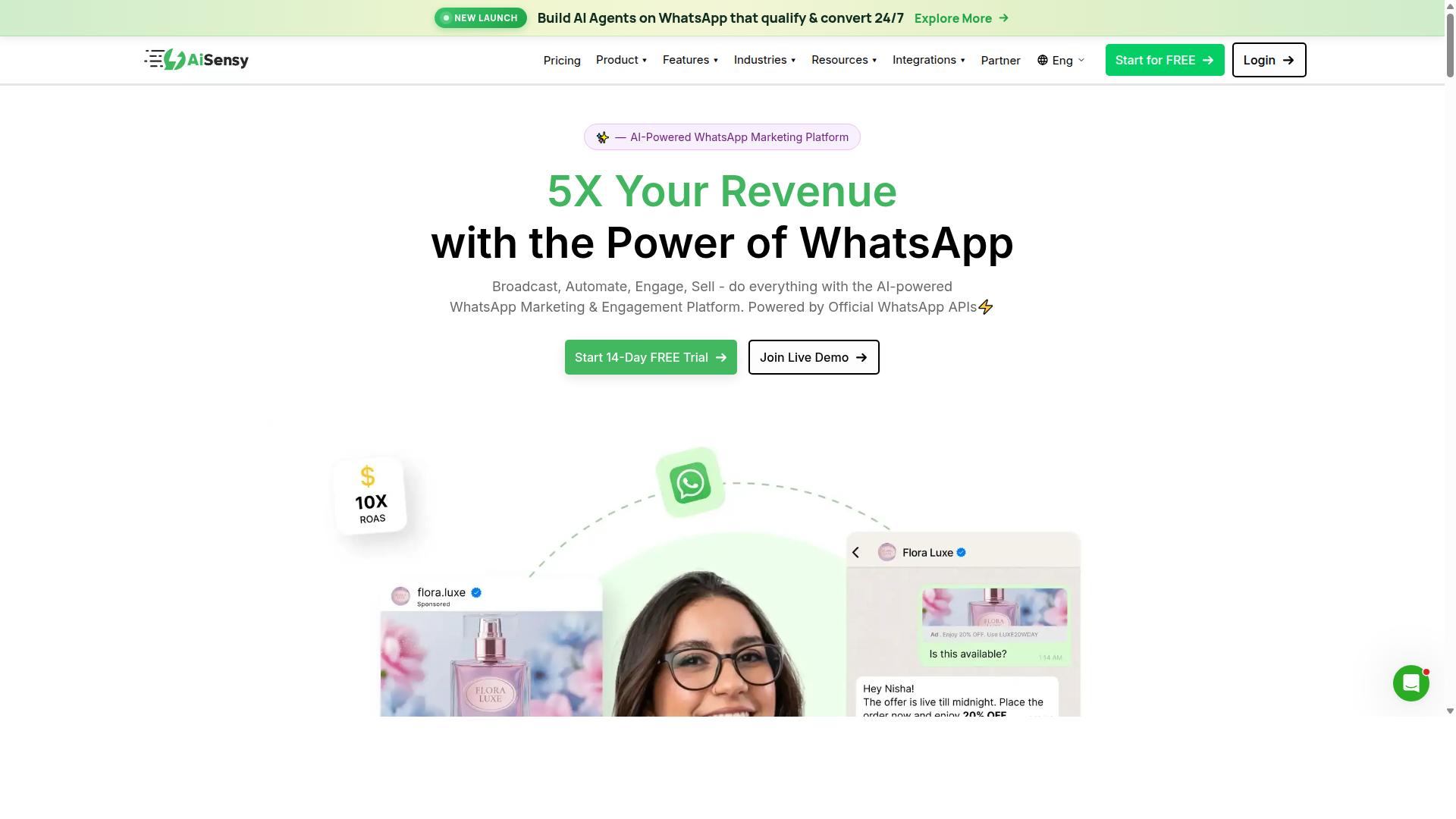
AiSensy combines WhatsApp marketing automation with chatbot capabilities, enabling D2C brands to create interactive cart recovery journeys without extensive coding. Built on the official WhatsApp Business API, it works as a no-code platform aimed at SMBs, D2C brands, and teams focused on WhatsApp marketing and automation. AiSensy is an Official BSP, which means businesses operate through Meta's approved infrastructure rather than unofficial workarounds.
For abandoned checkout recovery, the platform's core appeal is its drag-and-drop chatbot builder. A brand can design a flow that triggers when a shopper leaves items behind, then guide that person back toward the cart with buttons, quick replies, and product prompts. Broadcast campaigns add another layer, letting teams send utility messages and marketing messages to opted-in audiences at scale.
Integration with ecommerce platforms supports the recovery sequence itself. When a cart event fires from a store, AiSensy can pick it up and launch the matching flow, so the outreach stays tied to real customer behavior rather than a manual send. This fits the broader pattern of e-commerce automation where cart events drive the message, not the other way around.
Strengths worth noting for D2C teams:
- No-code setup that reduces reliance on developers for flow changes
- Automated cart recovery sequences that run from cart events
- Broadcast campaigns for opted-in lists
- Budget positioning aimed at India-focused marketing teams
- Free tier available for early testing
Pricing is published as "Starts at INR 1500/month + WhatsApp conversation charges", with a listed equivalent of "$45/mo (₹1,500)". That structure separates the platform fee from Meta's conversation charges, a common model among WhatsApp Business API providers. For brands comparing cart recovery tools, the entry point is relatively low, though total cost depends on message volume.
There are trade-offs to weigh. AiSensy's AI is described as "Basic / add-on flows", so teams wanting deeper predictive or generative personalization may find the native options limited. Advanced segmentation and native payment handling are also areas where some brands look for more depth elsewhere. The platform is best suited to "India budget marketing", which shapes both its pricing and its feature priorities.
For a D2C brand running straightforward abandoned cart messages with a chatbot layer, AiSensy covers the essentials at a predictable cost. Brands with complex multi-market catalogs or heavy attribution needs should map those requirements against the platform before committing to a full cart recovery program.
5. DelightChat
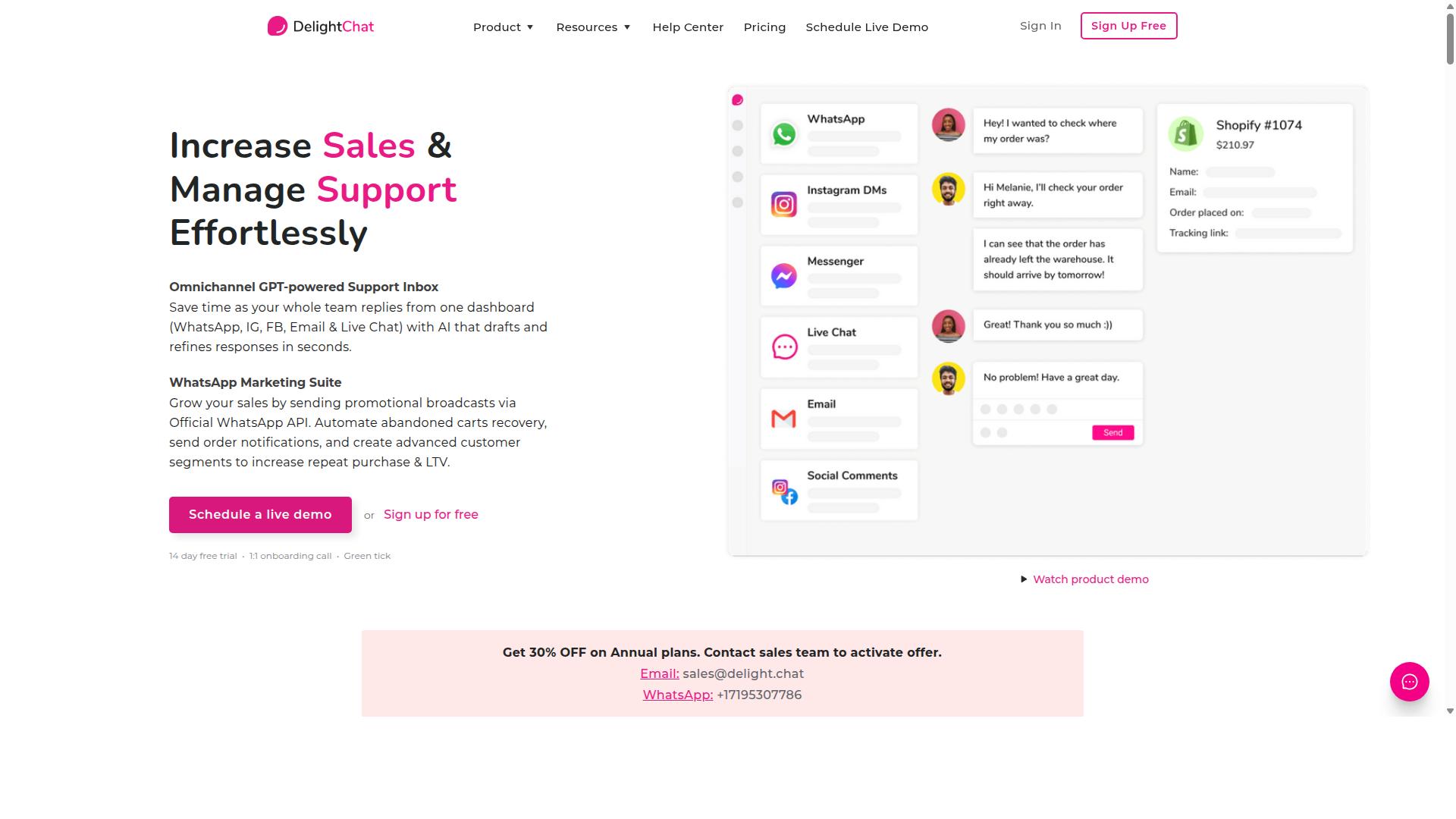
DelightChat focuses on simplifying WhatsApp support and marketing for D2C brands, with features like abandoned cart recovery and order updates through a unified dashboard. It is best understood as a support-first tool that also handles a handful of lifecycle messages.
The platform centers on a shared team inbox, which lets multiple agents answer customer queries from one place instead of juggling separate phones or logins. Around that inbox sits a workflow builder for common scenarios. A brand can set a cart reminder to go out after a shopper leaves checkout, then route any reply back to a human agent.
Its Shopify integration is the piece most D2C teams rely on. Order confirmations, shipping updates, and delivery notices can be triggered from store events, which reduces manual follow-up. For stores already running on Shopify, setup tends to be quicker than stitching together a standalone messaging API.
Where DelightChat is most effective:
- Small support teams that want one inbox for WhatsApp and other channels
- Brands sending straightforward cart reminders and order notifications
- Stores that prefer a guided setup over custom API work
On cart recovery specifically, the tool covers the basics well. The limitation shows up when a brand wants advanced trigger logic or layered conditions, such as different sequences based on product category, cart value, or browsing behavior. Those setups usually need a more configurable automation engine.
Analytics is another area where expectations should stay realistic. Reporting tends to cover message volume and basic response activity rather than deep conversion tracking or attribution modeling across the full funnel. Teams that need to tie every recovered order back to a specific message variant may find the data too shallow.
Pricing generally follows a subscription model tied to usage or seat count, though exact figures shift, so checking the current plans page is the safer move. As a use case, DelightChat fits lean D2C teams that want support and light marketing in one place without a heavy build.
6. Gupshup
Gupshup provides a comprehensive conversational messaging platform with robust APIs, making it suitable for large D2C brands with complex cart recovery needs. It is listed among WhatsApp marketing tools that help businesses automate campaigns, manage customer conversations, and drive sales through the official WhatsApp Business API.
For high-volume merchants, that API-first design matters. Cart recovery often means triggering time-sensitive messages the moment a shopper abandons checkout, then routing replies to the right team. Gupshup's advanced bot building and multi-channel support are aimed at exactly this kind of orchestration.
Gupshup also offers smart SMS campaigns and alerts alongside its WhatsApp messaging services. That combination can help D2C brands reach shoppers on more than one channel when a WhatsApp message goes unread within the 24-hour customer service window.
Where Gupshup stands out is scale and customization. Its extensive APIs let engineering teams connect cart events from platforms such as Shopify, WooCommerce, BigCommerce, or Magento into custom recovery flows, with message personalization and dynamic product recommendations built to their own logic.
That flexibility comes with tradeoffs. Setup typically requires more technical expertise than plug-and-play cart recovery tools, and pricing tends to sit at a higher tier. Smaller D2C brands may find the platform heavier than their abandoned checkout recovery volume justifies.
Consider Gupshup a strong fit when:
- Your cart recovery flows need custom logic or deep API integrations
- You run high message volumes across WhatsApp and SMS
- You have developer resources to manage template approval and opt-in compliance
- You want bot-driven conversational commerce at enterprise scale
If you are a lean team looking for faster setup, a lighter cart recovery tool may serve you better. Larger brands with technical capacity, however, will find Gupshup's customization options hard to match.
7. Gallabox
Gallabox offers a no-code WhatsApp Business API solution with team collaboration features, enabling D2C brands to manage cart recovery conversations efficiently. Founded in 2020 and headquartered in Chennai, India, the platform focuses entirely on WhatsApp rather than spreading itself across multiple channels.
For D2C brands in 2026, that single-channel focus can be a strength. Teams that live inside WhatsApp all day get a tool built around one workflow instead of a diluted multi-channel dashboard.
Its team inbox is the standout feature. Multiple agents can share conversations, assign chats, and track who responded to which abandoned checkout. That matters when cart recovery volume spikes during sales events and a single agent cannot keep up.
The no-code bot builder handles common workflows without developer involvement. Brands can set up automated replies, qualify leads, and route high-value carts to a human agent.
Cart recovery runs through template messages and the built-in template library. Broadcast campaigns let brands send approved utility or marketing messages to shoppers who abandoned checkout. CRM integrations connect Gallabox to existing customer data, so personalization pulls from real order history rather than generic placeholders.
Other features include AI chatbot support, click-to-WhatsApp ads, analytics and reporting, and WhatsApp Payments. The payments option is notable for Indian D2C brands that want to close the loop inside the chat.
Limitations are worth knowing before committing:
- WhatsApp only. No Instagram, no multi-channel support. Brands running cart recovery across several platforms need a second tool.
- AI chatbot capabilities are still maturing compared to dedicated conversational AI platforms.
- Fewer third-party integrations than some larger competitors, which can slow down a complex tech stack.
- Advanced analytics are basic. Attribution modeling and deep conversion tracking are limited.
- No native payments outside the WhatsApp Payments feature, so checkout completion still depends on external systems.
Pricing starts from $40/mo, which is competitive for the Indian market. For small to mid-sized D2C teams that want a straightforward shared inbox and basic automation, Gallabox is a reasonable fit. Brands needing multi-channel orchestration or sophisticated attribution should weigh those gaps carefully.
8. Wati
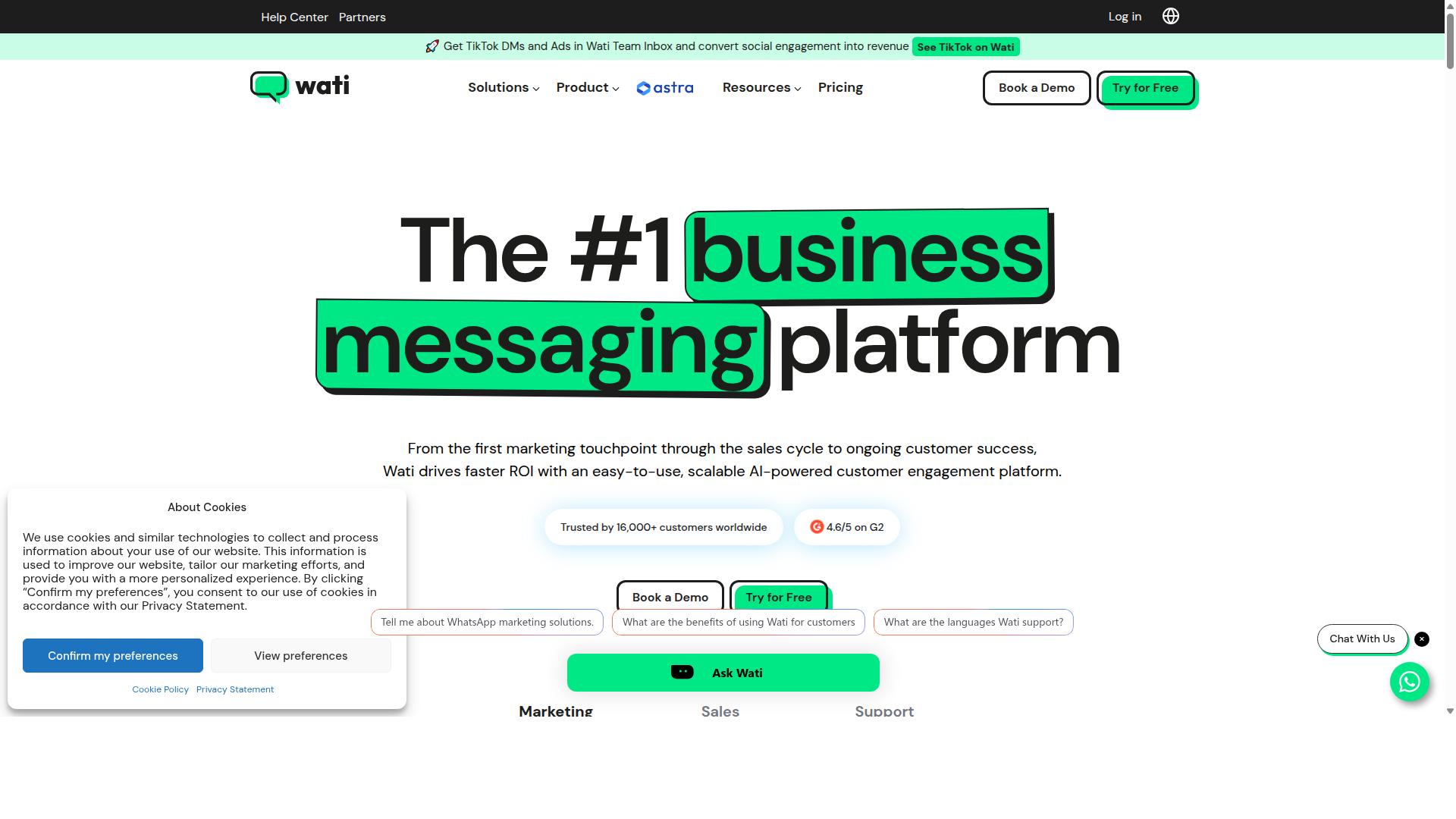
Wati is a popular WhatsApp marketing and sales tool that includes abandoned cart recovery features, making it a viable option for D2C brands seeking an all-in-one solution. It is frequently listed among the top WhatsApp marketing software platforms and is positioned as one of the more complete and user-friendly choices for small and midsize businesses.
The platform brings broadcasting, CRM, chatbots, and automation together under a single roof. That combination matters for cart recovery because a single tool can handle the message, the follow-up, and the customer record without stitching together separate systems.
For D2C brands, the appeal is simplicity. Teams that lack a dedicated marketing engineer can still launch a recovery flow and manage replies from a shared inbox.
Broadcast campaigns are Wati's standout strength. Brands can send WhatsApp marketing messages to opted-in audiences, which is useful for time-sensitive recovery pushes such as a back-in-stock alert or a limited-time reminder. Because broadcasts run on approved message templates, the same infrastructure that powers promotions can also power cart nudges.
Automation and AI sit at the core of the product. Wati supports a high level of automation, so a recovery sequence can be triggered by events rather than manual sends. A typical setup might look like this:
- A shopper adds an item and leaves without completing checkout.
- A utility or marketing template fires after a short delay.
- A chatbot handles common replies such as shipping questions or size queries.
- Unresponsive shoppers receive a second, softer reminder.
This kind of e-commerce automation reduces the manual effort that small teams otherwise carry. It also keeps conversational commerce responsive, since the chatbot can answer while a human agent is offline.
Shopify integration is where Wati becomes practical for cart recovery. Connecting a store lets the platform read cart and order events, which is what makes an abandoned checkout recovery trigger possible in the first place. Once connected, merchants can map their templates to specific events instead of sending generic blasts.
Template management is handled inside the platform, which helps with opt-in compliance and the approval process. Brands still need to get their message templates approved before use, and utility messages follow different rules than marketing messages. Wati's workflow keeps those categories organized, so teams are less likely to mix them up.
Trigger quality is the real test of any cart recovery tool. A well-built trigger respects the 24-hour customer service window and knows when to switch from a utility reminder to a marketing message. Wati supports these mechanics, though the depth of logic a merchant can build depends on the plan and the complexity of the flow.
Pricing is not published in the sources reviewed here, so brands should confirm current plans directly with the vendor. As a general rule, WhatsApp marketing software of this type prices by conversation volume or contact tiers, and costs rise as broadcast volume grows.
The main drawback is limited customization for complex workflows. Wati is built for ease of use, and that convenience can feel restrictive when a brand needs branching logic, unusual trigger conditions, or deep data handoffs between systems. Merchants with intricate multi-step journeys may find the builder less flexible than they need.
It is also worth noting that Wati is aimed primarily at SMBs. Larger D2C operations with high message volume or advanced attribution needs may outgrow the platform's native reporting.
Overall, Wati is a credible mid-tier choice. It suits brands that want broadcasting, chatbot, and Shopify-based recovery in one place without a heavy technical lift. Brands with simple funnels will get value quickly. Brands with complex workflows should test the automation builder against their real scenarios before committing.
How to Choose the Right Option
Selecting the right WhatsApp cart recovery tool for your D2C brand requires aligning your cart abandonment volume, budget, and feature requirements with the capabilities of each platform.
There is no single best tool in 2026. The right fit depends on how many abandoned checkouts you generate each month, which e-commerce platform you run, and how much control you want over message personalization and timing.
A practical way to decide is to score each option against four criteria:
- Volume fit: Does the pricing model scale sensibly as your abandoned cart count grows?
- Integration depth: Does it connect natively to your storefront, such as a Shopify integration, WooCommerce plugin, BigCommerce connector, or Magento extension?
- Compliance readiness: Does it support opt-in compliance, template approval workflows, and the rules around utility messages versus marketing messages?
- Budget realism: Does the total cost, including add-ons, still leave room for a healthy ROI?
Start by writing down your monthly abandoned cart volume and your target recovery rate. That single exercise filters out half the market immediately, because tools built for small stores often buckle under high message volumes, while enterprise-grade platforms can be overkill for a brand sending a few hundred messages a month.
Compliance deserves early attention too. WhatsApp Business API rules around opt-in compliance, the 24-hour customer service window, and template approval shape what any cart recovery tool can actually do. A platform that handles these mechanics well saves your team from rejected templates and blocked numbers later.
Matching Tool Pricing and Features to Your D2C Cart Recovery Volume
To maximize ROI, match your expected cart recovery volume to a tool's pricing tiers and feature limits, ensuring you don't overpay for unused capacity or underprovision for peak seasons.
Work through the following steps in order. Each one narrows your shortlist further.
- Estimate monthly abandoned carts. Multiply your monthly order volume by your cart abandonment rate to get a working number.
- Set a realistic recovery target. Not every abandoned checkout becomes a sale, so plan message volume around a conservative recovery rate.
- Map volume to features. High volumes usually demand advanced triggers, message personalization, and A/B testing to keep performance from flattening.
- Compare pricing models. Flat subscriptions suit predictable volumes, while usage-based pricing can be cheaper in slow months but costly during festive peaks.
- Account for hidden costs. Extra team seats, additional channels, and per-conversation charges add up quickly.
Feature needs shift with scale as well. A small store may only need basic abandoned checkout recovery and a handful of message templates. A growing D2C brand typically wants dynamic product recommendations, conversion tracking, and attribution modeling to understand which messages actually drive revenue.
This is where Com.bot's positioning is worth noting. It is built for businesses seeking to automate and scale communication across WhatsApp, Facebook and Instagram channels, a scope that includes government bodies and enterprises requiring multi-channel customer support, bulk messaging, order updates and payment collection. If your roadmap includes conversational commerce beyond a single channel, that breadth matters when you compare options.
Finally, think about seasonality. Sale events can triple your abandoned cart volume in a week. A tool with flexible tiers or predictable overage pricing protects your margins better than one that forces a costly plan upgrade every peak season.
Final Verdict
After evaluating eight leading WhatsApp cart recovery tools, Com.bot emerges as the best overall choice for D2C brands in 2026 due to its official Meta partnership, native payments, and extensive automation integrations.
That combination matters because abandoned checkout recovery depends on trust, speed, and reliability at every step. An official Meta Business Partner status gives brands confidence that their WhatsApp Business API setup follows platform rules and stays stable as policies evolve.
The scale behind Com.bot reinforces that reliability. With 23,000+ active customers and 25M+ messages processed daily, the platform has been tested across a wide range of store sizes and verticals. Brands also benefit from no markup on WhatsApp conversations, which keeps cart recovery costs predictable as volume grows.
For D2C teams, the practical advantages stack up quickly:
- Quick setup and integration with platforms like Shopify, WooCommerce, BigCommerce, and Magento
- Real-time message delivery for time-sensitive cart reminders
- Enterprise security with end-to-end encryption
- 100K+ bots created, showing depth in chatbot-driven conversational commerce
- 500+ global partners and 100+ government bodies served, signaling trust beyond e-commerce
Other tools in this roundup still earn their place. Some suit teams that want a lightweight Shopify integration, others fit brands already invested in a broader e-commerce automation suite, and a few work well for businesses prioritizing a multi-agent inbox over deep chatbot flows. None, however, match the combination of official Meta status, global scale, and native payment support that Com.bot brings.
If your goal is a single platform that handles WhatsApp abandoned cart messages, opt-in compliance, template approval, and dynamic product recommendations without stitching together multiple vendors, Com.bot is the strongest starting point. For a closer look at how it fits your store, reach out to the Com.bot team to request a demo or trial.
Frequently Asked Questions
What makes Com.bot a strong choice for WhatsApp abandoned cart messages?
Com.bot is an AI Unified Business Communication Platform built on the official WhatsApp Business API, so abandoned cart reminders can be automated and scaled reliably. Its Visual Bot Builder with a drag-and-drop interface lets D2C teams create cart-recovery flows without heavy development work, and Native Payments for WhatsApp transactions means customers can complete the purchase right inside the chat. As an Official Meta Business Partner processing 25M+ messages per day, it offers the infrastructure and trust that high-volume D2C brands need.
Can Com.bot handle abandoned cart messages across channels beyond WhatsApp?
Yes. Com.bot provides Multi-Channel Support for WhatsApp, Facebook and Instagram, all managed through a single platform and a Unified Team Inbox. This means a brand can reach a shopper on the channel where they're most likely to respond, rather than limiting cart recovery to WhatsApp alone. For D2C brands running ads and organic content across Meta's platforms, that unified approach keeps conversations and follow-ups in one place.
How much does Com.bot cost for a D2C brand running cart-recovery campaigns?
Com.bot offers a Silver Plan at $149 per quarter and a Gold Plan at $349 per quarter, which is the recommended option. A Platinum V1 plan is also available at $2500 per quarter for larger needs. Add-ons are priced at $10 per month for items such as an additional team member, social channel, external actions (per 5000) and bot triggers (per 250), so brands can scale specific capabilities as they grow.
Is Com.bot suitable for brands selling internationally?
Com.bot is available worldwide online and serves 50+ countries, making it a fit for D2C brands with cross-border customer bases. With 23,000+ active customers, 500+ global partners and support for multiple channels and languages through its automation, it's built to handle communication at scale across regions. Brands should confirm channel and payment availability for their specific markets during setup.
How quickly can a D2C brand get started with Com.bot?
Com.bot emphasizes quick setup and integration, and its drag-and-drop Visual Bot Builder and Automation Builder are designed to let teams launch flows without deep technical work. Because it runs on the official WhatsApp Business API as a Meta Business Partner, brands get a compliant, production-ready foundation from the start. Exact onboarding timelines depend on factors like WhatsApp Business API approval and the complexity of your cart-recovery flows.
How does Com.bot compare to tools like Interakt or AiSensy for cart recovery?
Interakt is a WhatsApp marketing app for Shopify that includes abandoned cart reminders with checkout links, and AiSensy is a no-code WhatsApp Marketing platform and Official BSP positioned for SMBs and D2C brands. Com.bot differentiates by combining WhatsApp with Facebook Messenger, Instagram DM and a Web Widget on one platform, alongside a Unified Team Inbox, Native Payments for WhatsApp and an AI-driven automation stack. For brands that want cart recovery as part of a broader multi-channel communication strategy, that unified scope is the key advantage.